
The 2026 Remote High Ticket Sales Playbook Close Big Deals from Home

Introduction: The Promise of Remote High-Ticket Sales
Imagine closing a deal worth thousands of dollars from your living room.

You set your own hours and work from anywhere. That is the promise of remote high-ticket sales. It offers life-changing income and real freedom. Many people dream of this lifestyle.
But here is the thing. Most people struggle to make it work. Why? Because selling high-value products is not like selling low-cost items. It requires a specific set of skills and a clear strategy. You cannot just wing it.
The world of work is shifting fast. A recent report from the World Economic Forum shows that about 1 in 10 job vacancies now asks for skills that didn’t exist a few years ago. This is especially true in B2B sales lead generation. Old sales scripts just don’t work anymore. Buyers are smarter. They expect more. You need a modern system to keep up.
Many sales professionals and career changers feel stuck. They search for answers online but only find scattered tips and tricks. They lack a trusted, step-by-step framework. This confusion stops them from reaching their income goals. It creates doubt and wasted time.
This article is designed to fix that problem. We have built a complete, research-backed playbook. It combines the best sales methodologies with a proven approach called Clip 4 Sales. This is not just another basic online sales training article. It is a practical guide to help you close bigger deals and build a stable, rewarding career.
If you are new to this field, do not worry. You do not need years of experience to start. The path is open to self-starters. In fact, we created a guide on how to find high paying entry level fully remote jobs to help you get started.

Let’s dive into the exact skills and strategies you need to master in 2026.
The 2026 Remote High-Ticket Sales Landscape: Opportunities & Realities
Remote work is no longer a temporary trend. It is the new normal. And high-ticket sales has grown right along with it. A recent report from the International Monetary Fund highlights a major shift: about 1 in 10 job vacancies in advanced economies now demands a skill that didn’t exist a few years ago [source: IMF PDF, 2026]. That includes the specific abilities needed for B2B sales lead generation and selling premium solutions from home. Companies are hiring distributed reps more than ever before.
But the opportunity comes with real competition. Typical earnings in remote high-ticket sales can far exceed traditional roles. You are often looking at six-figure incomes with uncapped commissions. Yet those numbers attract a lot of people. To stand out, you must keep learning. The online sales training landscape has changed. Old tactics like cold calling scripts and pushy closes don’t work anymore.

Buyers today are smarter. They have done their research before they even talk to you. They want a consultant, not a salesperson.
So what does the playing field actually look like in 2026? Here are a few key realities:
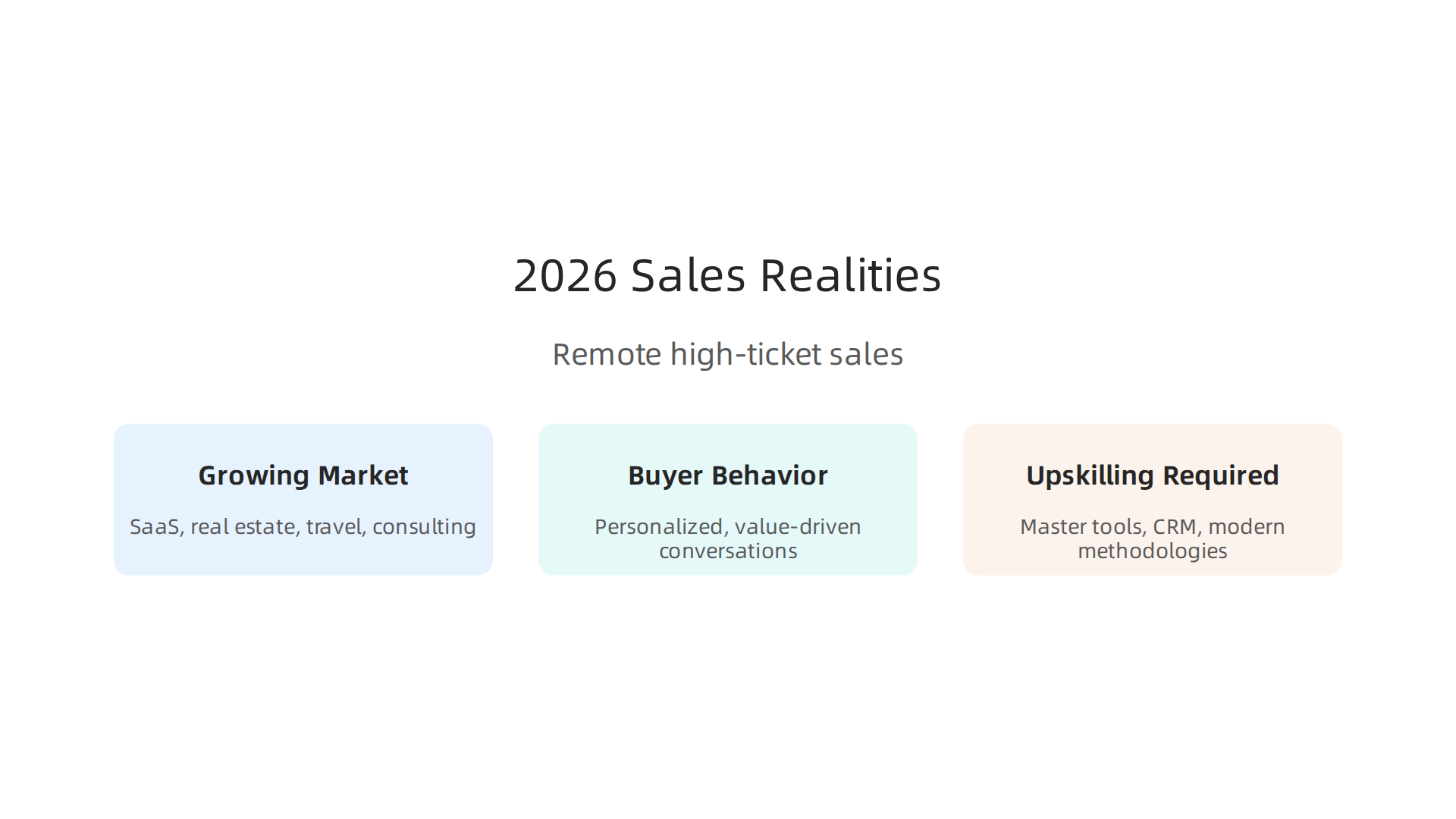
- The market is big and still growing. Verticals like SaaS, real estate, high-end travel, and business consulting are constantly looking for remote closers. The travel industry alone is seeing shifts in how people book high-value experiences, as shown in the Amadeus Travel Trends 2026 report.
- Buyer behavior has changed forever. Decision-makers expect personalized, value-driven conversations. They will ghost you if you sound like a robot. This is where a framework like Clip 4 Sales shines. It trains you to listen, diagnose, and guide the buyer toward a solution that matters to them.
- Upskilling is non-negotiable. You cannot coast on charm. You need a system. The best remote reps invest in continuous learning. They master sales tools, CRM software, and modern methodologies to stay sharp.
Before you dive into applications and pitches, take a moment to understand this landscape. Know which industries are hiring. Learn how buyers think. If you are just starting out, it helps to see where others have succeeded. Check out our comparison of Indeed, LinkedIn, and ZipRecruiter for remote high-ticket sales jobs to get a feel for the best job platforms in this space.
The opportunities are real. But only for those who prepare with the right knowledge and tools. Let’s move on to the exact skills you need to master for 2026.
Core Sales Methodologies That Close High-Ticket Deals
So what specific sales methods will help you win in 2026? The good news is you don’t have to invent anything from scratch. Proven frameworks already exist. The trick is knowing which ones work best for complex B2B sales and how to blend them for remote calls.
Let’s look at the big four that top performers use today.
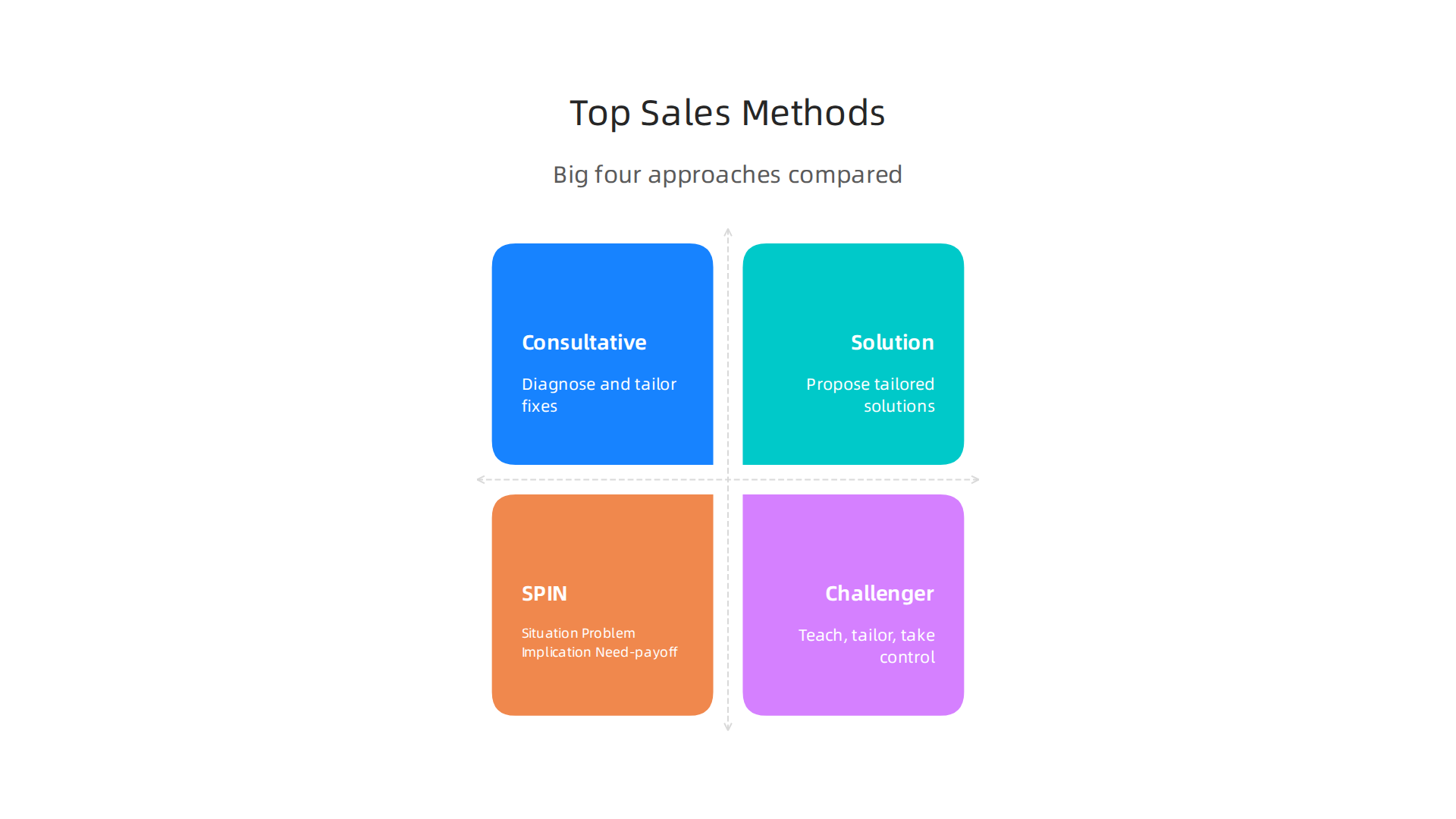
Consultative Selling and Solution Selling are the foundation. Instead of pitching features, you act like a doctor. You ask questions, diagnose the problem, and then offer a tailored fix. The Mentor Group’s 2026 guide lists these as essential for buyer-led sales.
They work because high-ticket buyers want to feel understood, not sold to.
SPIN Selling takes that a step further. Developed by Neil Rackham, this method uses four types of questions: Situation, Problem, Implication, and Need-payoff. It pulls the buyer toward their own realization that they need your solution. According to the Prospeo 2026 practitioner’s guide, SPIN is still one of the most effective ways to run discovery calls that close.
Challenger Sales flips the script. Instead of just asking questions, you teach the buyer something new about their business. You tailor your message to their specific situation and then take control of the sale. As the monday.com blog points out, the Challenger model works especially well for complex B2B deals where buyers are overwhelmed by options.
Each of these methods has strengths. But here’s the thing: using just one can leave gaps. That’s where Clip 4 Sales comes in. It’s a modern online sales training system that synthesizes the best parts of consultative, SPIN, and Challenger into one repeatable framework. It’s designed specifically for remote environments, where you can’t rely on body language or in-person rapport. Instead, you learn to listen deeply, ask smarter questions, and guide the buyer through a structured conversation. Many reps find that Clip 4 Sales gives them the confidence to handle any high-ticket call, whether it’s a first meeting or a final close.

Which methodology should you choose? It depends on three things:
- Product complexity. Simple products may not need a full SPIN or Challenger approach. But for high-ticket items like software, coaching, or consulting, consultative and SPIN methods are almost mandatory.
- Buyer journey length. Longer cycles (3+ months) benefit from Challenger’s teaching style. Shorter cycles (a few weeks) might work better with solution selling.
- Your personal style. Some people naturally enjoy being a teacher; others prefer being a partner. Pick what feels authentic to you. Then practice until it becomes second nature.
Remember, you don’t have to stick to one method forever. The best remote sales pros mix and match. Start with consultative to build trust, use SPIN questions to uncover pain, and apply Challenger techniques to reframe the buyer’s thinking.
Once you have the methodology down, the next step is finding a role where you can apply it. Check out our guide on how to land a remote high-ticket sales job at Amazon to see these skills in action at one of the world’s top companies.
The framework is your engine. Now let’s talk about the fuel: the exact skills you need to run it.
Lead Generation Strategies for the Remote High-Ticket Sales Professional
Having a strong sales methodology is like having a great engine. But without leads, that engine has nothing to drive. In remote high-ticket sales, finding qualified prospects is often the hardest part. The good news? You have more tools than ever to fill your pipeline.
Most successful remote reps use a mix of inbound and outbound strategies.
Inbound lead generation is about making people come to you. This includes content marketing, webinars, and SEO. These methods build trust over time, but they take months to gain momentum. If you are just starting out, waiting for inbound leads can feel slow.
Outbound outreach is faster but requires precision. Cold email and LinkedIn messaging can get you conversations today. The key is targeting the right people with the right message. According to recent benchmarks, cold email reply rates average between 1% and 5%, while top performers see rates as high as 15-25% by combining tight targeting with personalization. LinkedIn InMail performs even better, with reply rates of 10-25%.
So where should you focus most of your energy? Social selling on LinkedIn.
LinkedIn is the goldmine for remote high-ticket sales.

LinkedIn outreach delivers 20-35% reply rates compared to cold email’s 4-5%. That is up to seven times better performance. Why? Because LinkedIn profiles show intent. When someone shares content about their industry challenges or connects with thought leaders, they are signaling they are open to learning. That is your opening.
The trick is to move from random connection requests to structured conversations. This is where the Clip 4 Sales methodology shines. It teaches you to listen deeply and ask smarter questions. You do not just blast a generic pitch. Instead, you use SPIN-style questions in your initial message. For example: "I see you are growing your sales team. What is the biggest challenge you are facing in hiring closers?" This pulls the prospect into a real dialogue.
Once you start a conversation, you need a system to keep prospects moving through your pipeline. B2B lead generation statistics show that consistent follow-up is what separates top performers from the rest. The Clip 4 Sales framework gives you a repeatable structure for nurturing every lead from initial outreach to close.
You do not need a huge list of leads. You need a system that qualifies prospects quickly and builds relationships over time. That is what online sales training programs like Clip 4 Sales provide. They teach you to combine the best of inbound and outbound into one workflow.
Ready to put this into action? If you are looking for the best platforms to find remote high-ticket sales roles, take a look at our guide on how to compare Indeed, LinkedIn, and ZipRecruiter. It will help you focus your job search on the channels that actually deliver results.
Lead generation is a skill. With the right methodology and consistent practice, you can build a pipeline that never runs dry.
Clip 4 Sales: A Unified Framework for Methodology and Lead Generation
You already saw how lead generation and sales methodology are connected. But what if you could combine them into a single system that tells you exactly what to do each day? That is what Clip 4 Sales delivers.
Most sales training teaches you a methodology or a lead generation tactic. Rarely do you get both in one package. Clip 4 Sales bridges that gap. It is a step by step system that aligns your sales methodology with daily lead generation actions. No more wondering what to do next.
Here is the framework broken down into four clips:

Clip 1: Identify
This is where you find the right people to talk to. Not any lead. The right lead. You use social selling signals on LinkedIn, job changes, content engagement, and shared connections. You combine that with tight targeting based on your ideal customer profile. The goal is simple. Build a list of prospects who actually match your offer.
Clip 2: Connect
Now you reach out. But you do not send a generic pitch. You use SPIN style questions to start real conversations. Instead of "Hi, I sell X," you say something like "I see you are scaling your team. What is the hardest part of finding closers right now?" This pulls the prospect in. According to analysis of top sales methodologies, SPIN selling pulls the customer toward the solution rather than pushing product features. That is exactly what you want here.
Clip 3: Demonstrate
Once you have their attention, you show value. You do not dump features. You demonstrate how your solution solves their specific problem. This is where your sales methodology training kicks in. You listen, you ask deeper questions, and you match your offer to their pain points. The buyer feels understood.
Clip 4: Close
This is the final clip. You handle objections, build urgency, and ask for the sale. But you do it from a place of service, not pressure. If you have done the first three clips well, closing feels like a natural next step.
Real world adoption shows reps using Clip 4 Sales achieve shorter ramp up times and higher win rates. Why? Because the system gives you a repeatable process. You are not guessing. You are following a proven path.
The best part? You can learn it through structured online sales training that focuses on high-ticket deals. You do not need years of experience. You just need the right system and the discipline to follow it.
Getting started with Clip 4 Sales starts before any outreach happens. First, you need a great job that will let you apply the framework. Our guide on how to compare Indeed, LinkedIn, and ZipRecruiter will show you which platform works best for finding remote high-ticket sales roles in your area.
Once you land that role, the four clips become your daily playbook. Identify in the morning. Connect by midday. Demonstrate and close in the afternoon. Rinse and repeat.
And if you are aiming for a specific company, check out our step-by-step guide on how to land a remote high-ticket sales job at Amazon. It walks you through the exact process for one of the biggest employers in the space.
Clip 4 Sales is not just theory. It is a working system that turns methodology into daily action. And in remote high-ticket sales, that consistency is everything.
Overcoming Pain Points: From Job Seeker to High-Ticket Closer
You’ve seen how Clip 4 Sales gives you a repeatable system for lead generation and closing. But what if you’re still stuck as a job seeker?

Maybe you worry about fake job listings. Maybe you lack the experience for high-ticket roles. Or maybe you’re switching careers and don’t know where to start.
Let’s tackle those pain points one by one.
1. Legitimacy Concerns: How to Find Real Opportunities
The remote sales world has a reputation problem. Scams are real, and they cost job seekers time and money. But you can dodge them by targeting companies that are transparent about compensation and offer proven training programs.
Firms that certify their reps in a structured system like Clip 4 Sales are a strong signal. They invest in your success. Look for job posts that mention specific methodologies, not just “uncapped commission.” A good sign is when the employer outlines a clear sales process. According to the 2026 Sales Training Selection Guide, companies that prioritize structured training see better retention and performance. That’s the kind of employer you want.
Also, stick to platforms that vet their listings. Our guide on how to find part‑time high‑ticket sales jobs hiring immediately and avoid scams gives you a practical checklist to separate real jobs from fake ones.
2. Skill Gaps: Close the Gap with Deliberate Practice
Even if you land a legitimate role, you might feel underqualified. High-ticket sales needs consultative selling, objection handling, and confidence on the phone. These aren’t magic talents. They are learnable skills.
Clip 4 Sales turns skill development into a daily routine. You practice identifying the right leads, connecting with SPIN‑style questions, demonstrating value, and closing from a service mindset. Each clip builds on the last. Over time, these actions become habits.
Research from Spekit’s breakdown of top sales methodologies shows that reps who follow a structured framework improve their win rates significantly. Clip 4 Sales gives you that structure. You don’t need to guess what to do next. The process tells you.
3. Career Switchers: Use What You Already Know
Maybe you came from customer service, teaching, or even the military. Good news: you already have transferable skills. Listening, empathy, problem-solving. Those are the foundation of consultative selling.
Clip 4 Sales helps you repackage those skills. When you follow the system, you demonstrate competence fast. Hiring managers care more about your ability to follow a process than your past job title. The How to Break Into Remote Sales From Any Background (2026) article confirms that SDR roles are designed as entry points and don’t require a sales background. Combine that with a proven framework like Clip 4 Sales, and you become a strong candidate.
You don’t need years of experience. You need the right system and the discipline to use it. Clip 4 Sales gives you both.
Your 90-Day Action Plan to Launch or Elevate Your Remote High-Ticket Sales Career
You have faced the pain points. You know that clip 4 sales gives you a proven system. Now it is time to turn knowledge into action. The remote sales market is on fire in 2026. According to data from Money Talks News on remote work trends, sales and business development roles are growing faster than almost any other remote career category. High earners are taking notice.
Here is a simple 90 day plan to launch or level up your remote high-ticket sales career.
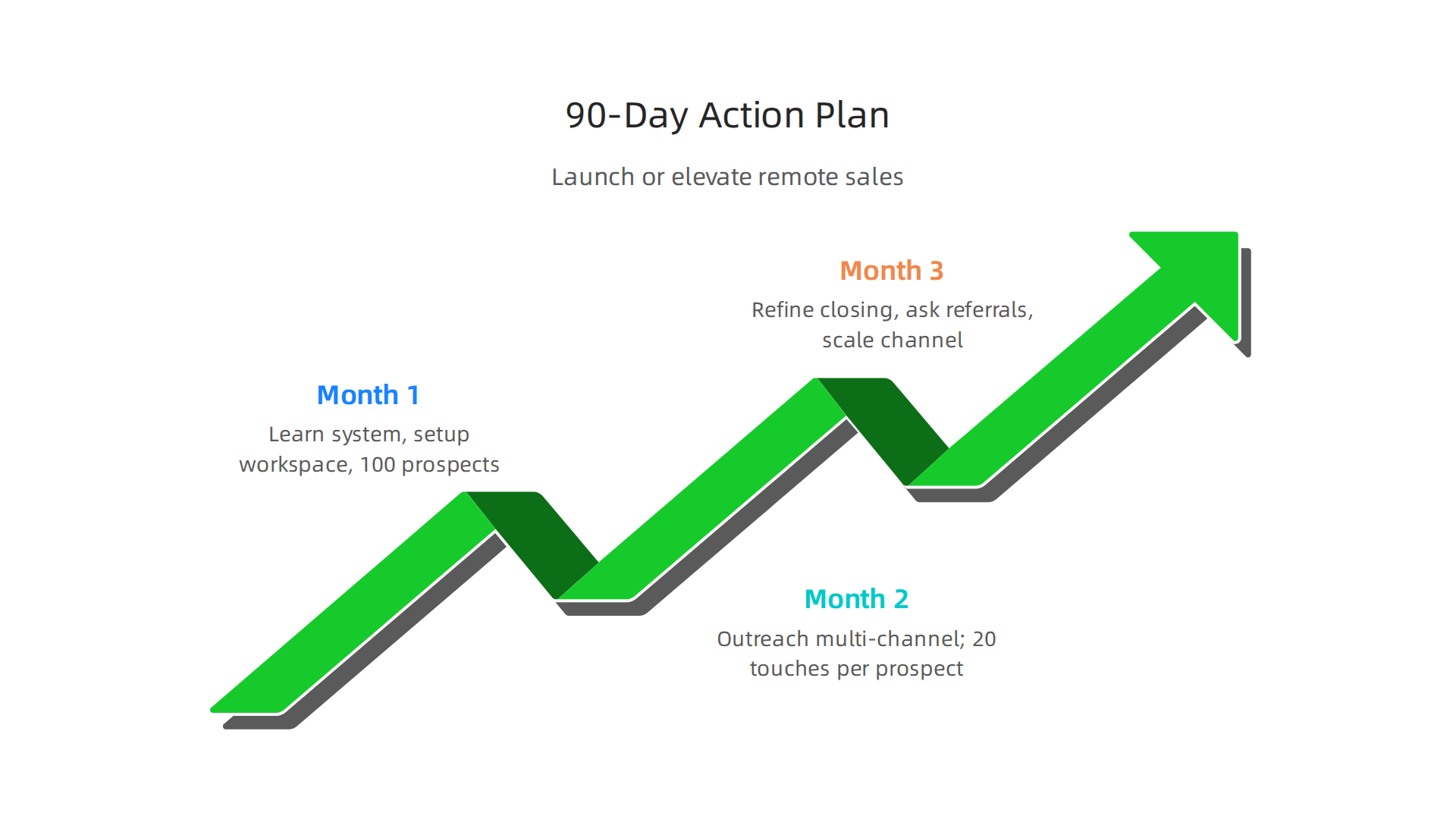
Month 1: Learn the System and Build Your Foundation (Days 1-30)
Your first month is about learning and setup. Do not jump into cold calls yet. Build the base first.
- Master the Framework: Commit to one online sales training system. That is where clip 4 sales shines. Go through each clip until you understand the lead generation, connecting, and closing steps. Take notes.
- Set Up Your Remote Workspace: You need a quiet room, a solid computer, and reliable internet. Nothing fancy. Just consistent.
- Build Your First Prospect List: Pick one industry. Find 100 decision makers. Use LinkedIn or free business directories. Quality matters more than quantity here.
- Research Tools: Look at tools that will save you time. The Best Sales Productivity Tools in 2026 guide lists software for finding emails and tracking follow ups. Pick one or two to learn.
If you are still actively applying for roles while building your own book of business, check out our guide on how to land a remote high-ticket sales job at Amazon in 2026. It is a great example of what large companies now look for.
Month 2: Execute Your Outreach Campaigns (Days 31-60)
Now you take action. This is where B2B sales lead generation becomes real. Do not overthink it. Just start.
- Go Multi-Channel: Send a mix of emails, LinkedIn connection requests, and phone calls. Aim for 20 touches per prospect over two weeks.
- Track Everything: Use a simple spreadsheet or a CRM. Write down what they said, what you sent, and the outcome.
- Iterate Fast: If your open rates are low, change your subject lines. If prospects ghost you after the first call, change your discovery questions. The market will teach you if you let it.
Month two is about volume and learning. You are not looking for perfect results yet. You are looking for data.
Month 3: Refine, Close, and Scale (Days 61-90)
By month three, you have a system and data. Now you polish it and grow it.
- Perfect Your Close: High-ticket sales is about solving real problems. Use the consultative skills from clip 4 sales to guide every conversation. Practice your objection handling until it feels natural.
- Ask for Referrals: This is the secret weapon of top closers. After every conversation, ask: "Who else do you know who might need this?" Referrals close much faster than cold leads.
- Scale Your Best Channel: Did LinkedIn work better than email? Double down on LinkedIn. Did a specific industry reply more? Focus there.
To keep your pipeline full of fresh opportunities, read our guide on how to find remote high-ticket sales jobs on Indeed without getting scammed. It helps you spot real roles from fake ones.
Your 90 Day Result
At the end of 90 days, you will know exactly what works for you. You will have real skills, a working process, and a clear path forward. The remote sales market is growing fast in 2026. The only question left is: will you start today?
Summary
This article shows how to build a remote high-ticket sales career in 2026 by explaining the market landscape, the buyer behaviors that have changed, and the exact skills you need to win. It reviews proven methodologies—consultative selling, SPIN, and Challenger—and introduces Clip 4 Sales, a four-step framework (Identify, Connect, Demonstrate, Close) that combines methodology with daily lead-generation actions. The guide explains practical lead strategies, with a focus on LinkedIn and multi-channel outreach, and gives real reply-rate benchmarks so you know where to focus. It also addresses common job-seeker pain points—scams, skill gaps, and career switches—and shows how to repackage transferable skills. Finally, you get a concrete 90-day plan to learn the system, run outreach, refine your pitch, and start closing or landing a legitimate remote high-ticket role.